The Work Exists Before the Opportunity
"Making great work creates opportunities, but turning visibility into paid commissions requires reaching the right people."
I've made more than a thousand posters since starting Another Poster in 2017.
Most attracted modest attention.
Some disappeared into the feed almost immediately.
Over time, Instagram became my main source of commissions.
Art directors found my typographic work through the posters I shared.
Those encounters led to paid projects, including commissions from
Fortune Magazine and Playboy.
No speculative presentation.
No elaborate pitch deck.
Work I had already created gave someone a reason to get in touch.
Set this beside the way many freelancers spend their time.
Six weeks preparing one pitch for a dream client.
The deck is immaculate.
The concepts are strong.
The timing is wrong.
The client picks someone else.
Six weeks produces a folder of unused ideas.
At roughly seventeen hours a week, six weeks adds up to a hundred hours.
Fifty evenings at two hours reaches the same total.
The pitch depends on one yes.
The posters remain available long after the feed moves on.
The Single Pitch Problem
Many freelancers build their year around a handful of big moments.
The dream client.
The annual pitch.
The portfolio relaunch.
Each one carries enormous weight.
The brief has to match your strengths.
The budget has to exist.
The timing has to work.
When everything rests on one attempt, you overwork it.
You second-guess every decision, because one refusal feels like a verdict on your ability.
It is one data point, and you collected only one.
There is nothing wrong with pursuing a substantial commission.
The problem begins when too much depends on its outcome.
Small Attempts, Full Standard
More attempts do not mean cheaper work.
A discounted commission fills your calendar and sets a low rate for everything around it.
Better work arrives and finds you busy.
The attempts worth multiplying take hours, not weeks.
A self-initiated poster.
A short, specific email to an art director whose covers you admire.
A typographic experiment shared with your audience.
None requires you to lower your rate.
None commits weeks of your time.
Each creates another opportunity to put your work in front of someone.
Personal work costs time, too.
The difference is simple: you choose the brief, own the result and decide where it goes next.
My posters have followed this approach for years.
I wasn't making them to fulfil a client's brief.
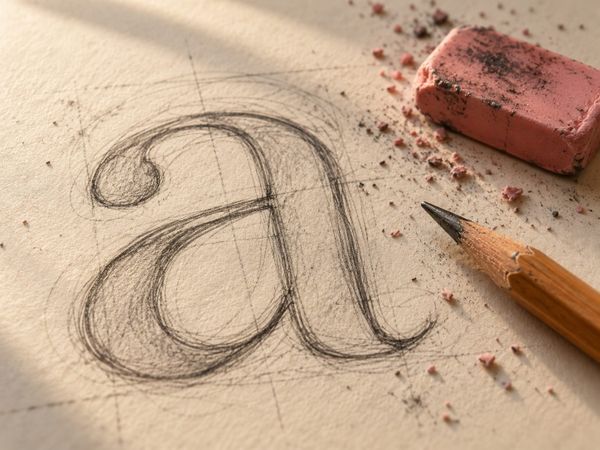
I was exploring typography on my own terms.
I treated each piece seriously, even when nobody had asked for it.
Sharing the results on Instagram gave art directors a way to encounter my work.
They saw the letterforms, compositions and ideas before they had a project for me.
When a suitable brief arrived, my work was already familiar.
The poster wasn't the commission.
It was the introduction.
Most posts received a modest response.
Others reached people looking for something specific.
There was no guarantee any particular poster would lead anywhere.
Without making and sharing the work, those opportunities might never have appeared.
What Volume Changes
More work creates more chances to be seen.
It also changes how you approach the next piece.
When no single piece carries the year, the pressure drops.
You try the risky idea, because a failed poster costs one evening.
A designer who spends months developing one piece has more invested in every decision.
A designer who produces regularly gets more opportunities to test ideas, recognise weaknesses and improve.
Volume also changes the evidence others have of your work.
An art director who encounters your work repeatedly sees how you approach different problems.
One project demonstrates one solution.
Fifty good projects demonstrate a consistent standard across many.
Visibility alone is not enough.
The right person still needs to see the work.
They need a relevant brief, a budget and a reason to commission you.
Consistency improves the chances of being remembered.
It does not guarantee the call.
The quality bar stays where it was.
Every poster, every email, every experiment should reflect the standard you want to be hired for.
The only thing you reduce is the size of each attempt.
What Changed
More than a thousand posters.
Years of consistent publishing.
For years, Instagram was my main source of commissions.
Art directors encountered my work, followed what I was making and occasionally got in touch with a brief.
Today, the same approach produces very different results.
I still make the posters.
I still publish the work.
The commissions no longer arrive as they once did.
Some posters reach the same people.
Some reach nobody with the authority to commission work.
Some reach the right person at the wrong time.
Instagram gave my work visibility.
The quality of the work gave art directors a reason to contact me.
Making the posters also improved my understanding of typography and helped establish a recognisable body of work.
But making more work has never guaranteed more clients.
The lesson isn't to stop making things.
It's to stop relying on visibility alone.
Creating the work, showing it to the right audience and turning interest into paid commissions are three separate activities.
One demonstrates your ability.
One creates the opportunity to be seen.
The last requires a client with a reason to hire you.
None replaces the others.
The useful habit is making attempts small enough to repeat, while ensuring some reach people with the authority and budget to commission your work.
Closing thought
A single attempt feels like it has to be perfect because it carries everything.
Fifty attempts give you room to learn, improve and try again.
Make the work worth seeing.
Then make sure the right people see it.
Until next time,
—Gary
Every other Sunday I share honest reflections on creativity and freelancing · plus my latest poster work.
If this was useful, feel free to pass it on.
📬 Enjoyed this letter? Browse recent essays & experiments:
All posts → / Instagram →