Cheap to Produce. Expensive to Read.
AI has made writing faster, but the time saved by the sender often becomes extra work for the reader.
Writing used to cost the writer time.
Ten paragraphs took longer than two.
The friction limited how much anyone sent.
It guaranteed neither clarity nor careful thinking, but more output demanded more effort.
Generative tools removed most of the friction.
A three-paragraph email takes seconds, and a polished proposal takes less time to generate than to read.
The effort has not gone.
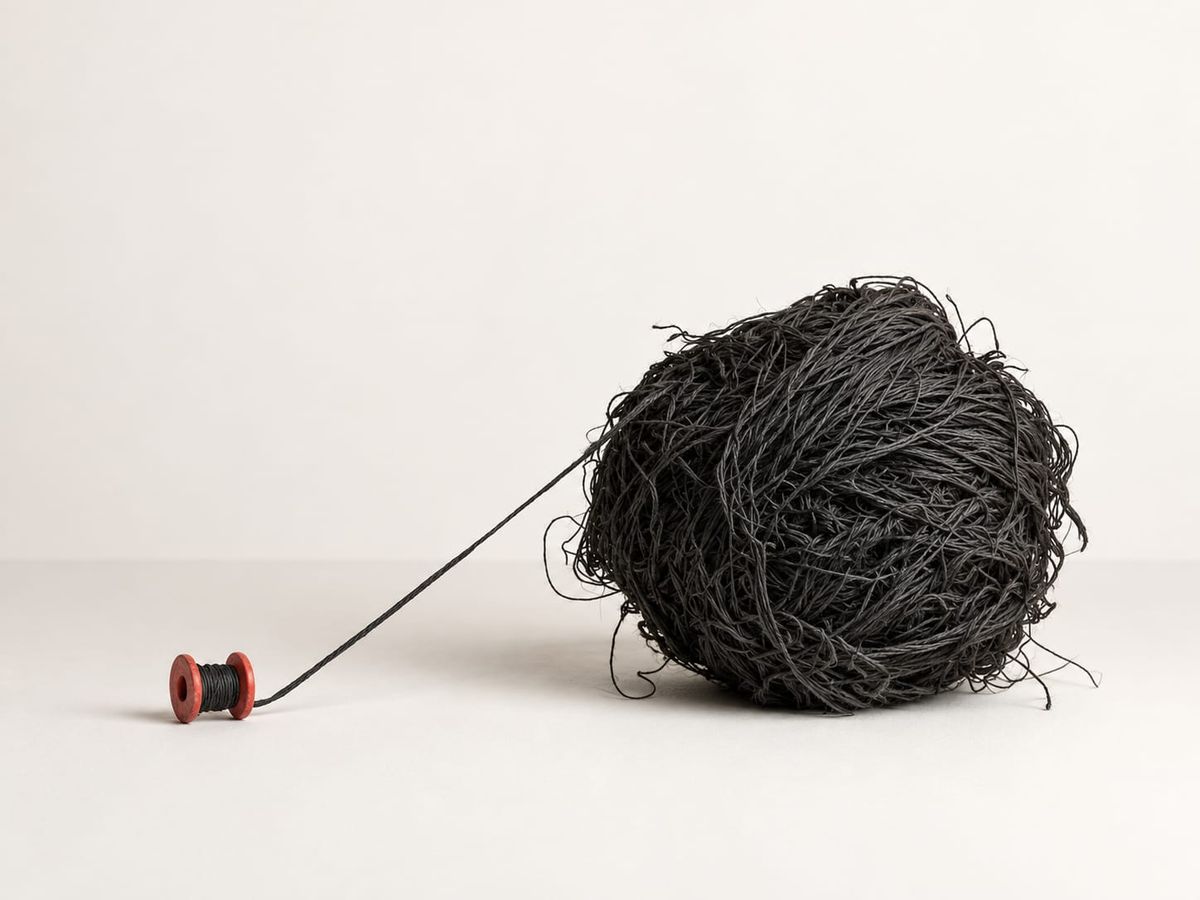
It has moved from the sender to the receiver.
The Transfer
Every unnecessarily long generated message shifts a cost.
The sender saves minutes. The receiver spends them.
Say a client produces a brief in two minutes.
You spend forty reading it, working out what they meant and separating the real requirements from the padding.
You reply with a considered answer, which takes an hour.
The client runs it through a summariser in four seconds.
The receiver senses the imbalance before understanding why.
Messages feel padded.
Replies feel automatic.
Fatigue arrives first, and the cause stays unnamed.
Trust shifts too.
Length no longer signals effort, so receivers check, re-read and ask for confirmation.
Each check adds another cost, often paid by the person already doing the work.
What Reaches the Designer
Design is a receiver-heavy trade.
Clients send briefs, feedback and references.
You read, interpret and sort them.
The quality of your work depends partly on the quality of what arrives.
A useful brief requires decisions about the problem, the audience and the intended outcome.
A comprehensive document does not prove anyone made them.
A generated brief arrives long, complete and slightly wrong.
Every clause reads as plausible.
Nothing quite matches what the client wants.
The brief has not resolved the important questions.
You resolve them before the paid work starts.
Feedback follows the same pattern.
A one-line comment is often enough: make the headline stronger.
Instead, it arrives as four paragraphs of framework, rationale and additional suggestions.
You act on the one line, after reading the other four.
Across a project, those hours add up.
They rarely reach an invoice.
The Question Senders Skip
Most senders skip one question.
Would the person receiving this thank you for its length?
If the answer is no, the message runs longer, softer or more padded than the situation needs.
The sender saved time by spending someone else's.
Used well, AI produces a shorter, clearer message by removing what the situation does not need.
Used badly, it produces a longer one, because extra words cost almost nothing.
The technology is the same in both cases.
The target differs.
One sender optimises for their own speed, the other for the receiver's time.
Your own proposals sit on the same scale.
A four-page proposal demands four pages of attention, however it was produced.
If the client needs four pages to understand the scope, deliverables and fee, those pages earn their place.
If two pages communicate the same information, the other two serve the sender.
The test is whether the person receiving your work benefits from it.
Faster production is useful.
Faster production at someone else's expense transfers the work.
Closing thought
Every message has two costs.
The time spent producing it.
The time spent understanding it.
Generative tools have reduced the first.
They haven't eliminated the second.
Saving yourself five minutes isn't progress if it costs someone else twenty.
🪶 Want more creative insights each Sunday?
Read more on the blog → / Join on Instagram →
Another Newsletter
A fortnightly essay on creative practice and freelance life.
New posters appear between editions.