What Rejected Work Actually Builds
"The rejected work was reconnaissance."
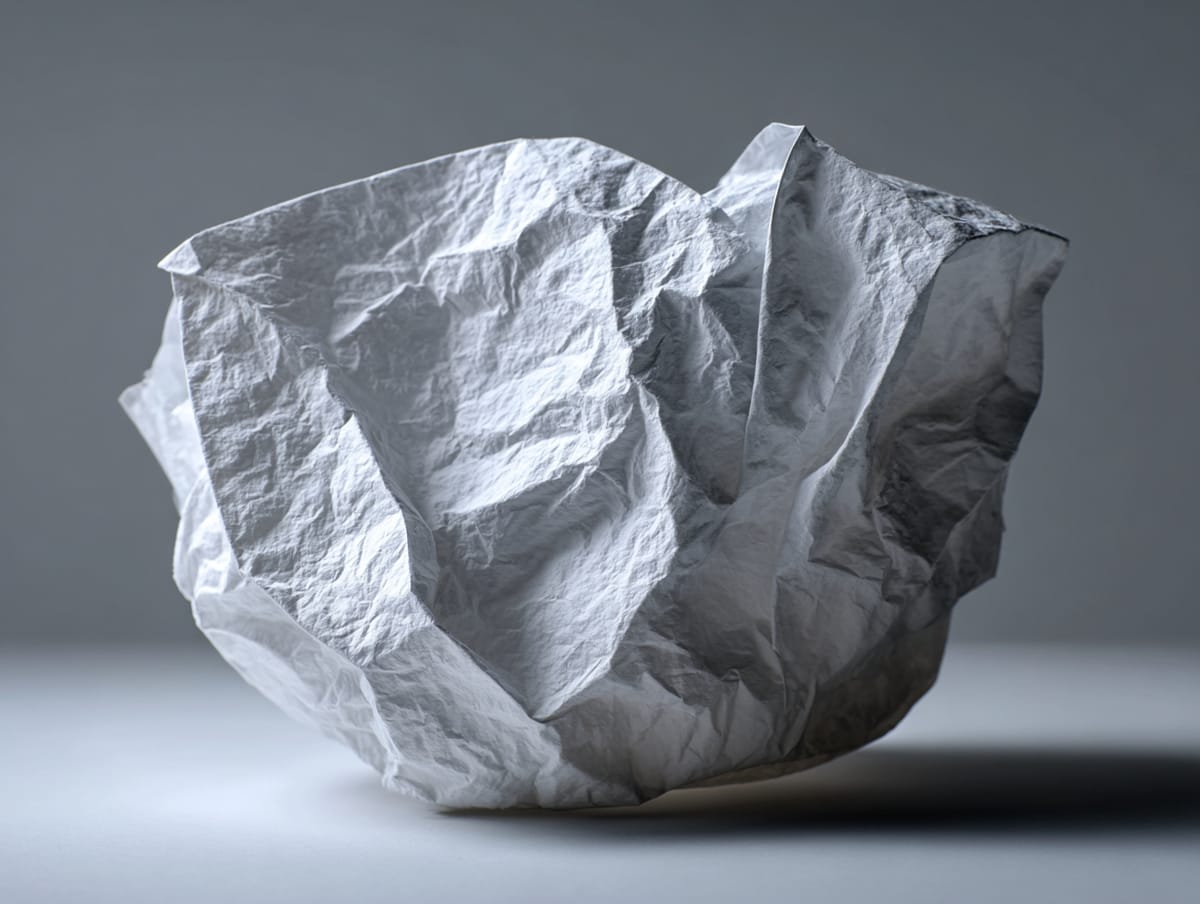
Rejected work feels like wasted effort.
Hours spent on concepts the client does not choose.
Days refining directions that disappear in the next meeting.
Weeks developing work that never reaches production.
The time appears lost.
It is not.
Rejected work builds things accepted work cannot.
Accepted work reinforces what already works.
Rejected work exposes what still needs development.
Rejected Work Expands Range
Accepted work stays within the space the client recognises.
You refine their preference.
You execute the direction they already trust.
You deliver what they feel comfortable approving.
Rejected work often sits outside that space.
It explores directions the client hesitates to choose.
Approaches that feel risky.
Solutions that stretch the brief further than expected.
Even when rejected, the exploration remains.
The range stays with you.
Future work draws from it.
Portfolio Work Comes From Rejected Directions
A concept rejected today often becomes portfolio work later.
The idea did not fit that project.
The timing was wrong.
The client needed something safer.
Years later the same direction fits a different problem perfectly.
The work was never wasted.
It was development ahead of its moment.
Ideas explored early, rejected once, and reused when the right context appears.
Client Rejection Clarifies Preference
Clients often struggle to describe what they want.
They articulate rejection more clearly.
Three directions presented.
One accepted.
The pattern becomes visible.
What they value.
What they avoid.
How they evaluate risk.
Each rejection reveals more about how they think.
This information improves the next round of work.
And future projects with similar clients.
The rejected work was reconnaissance.
Rejected Work Shows Problem Understanding
Several concepts rejected for the same reason reveal something important.
The execution may be strong.
The typography may be refined.
Yet all directions miss the same point.
The problem understanding was incomplete.
Rejection exposes this gap quickly.
Accepted work might hide the misunderstanding.
Rejection forces it into view.
Once visible, it becomes correctable.
Rejection Reveals Misalignment
Some rejections reveal more than design feedback.
They reveal misalignment.
Between your instincts and the client's taste.
Between your interpretation of the brief and their expectations.
Between your working style and their decision process.
Accepted work often hides this misalignment.
Rejection exposes it early.
That clarity helps determine whether the collaboration will strengthen over time or remain a constant struggle.
Process Improves Through Rejection
Work is sometimes rejected not because of the idea but because of the process around it.
Too many options presented too early.
Too little context explaining the direction.
Decisions introduced in the wrong sequence.
The rejection highlights weaknesses in how the work was guided.
Process adjustments follow.
You refine how you present work.
How you structure choices.
How you frame decisions.
Process improvement grows from moments where the process failed.
Rejected Work Becomes a Reference Library
Rejected concepts rarely disappear.
They move into archives.
A direction explored in one project becomes reference material later.
A form language tested once appears again in another context.
A structural idea returns when the right brief arrives.
Design thinking compounds this way.
Work created for one client quietly becomes the starting point for another.
The archive grows with every rejected direction.
Resilience Builds Through Rejection
The first rejection feels personal.
The tenth feels different.
Not because the work matters less.
Because the pattern becomes familiar.
Rejection reveals itself as part of the process rather than the end of it.
This resilience becomes a professional skill.
The ability to keep exploring, presenting, and refining after rejection strengthens over time.
Accepted work does not develop this capability.
Only repeated rejection does.
Closing thought
Rejection feels like the end of something.
It is usually the beginning of something else.
You just cannot see it yet.
✉️ Every other Sunday I share short, honest reflections on creativity & freelancing: Read the newsletter →